
Gastric Bypass (RNY)
Overview
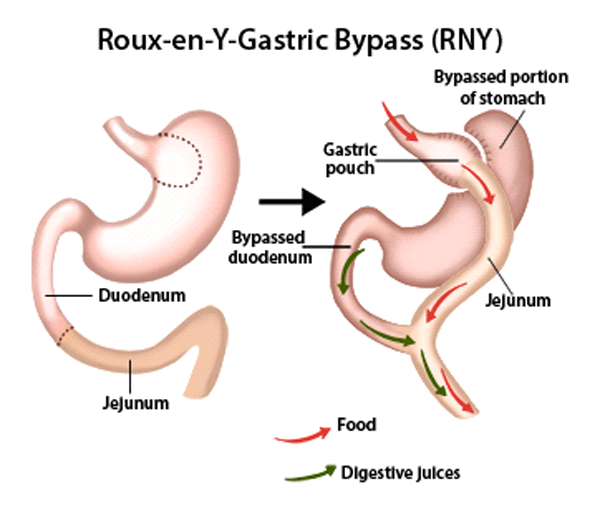
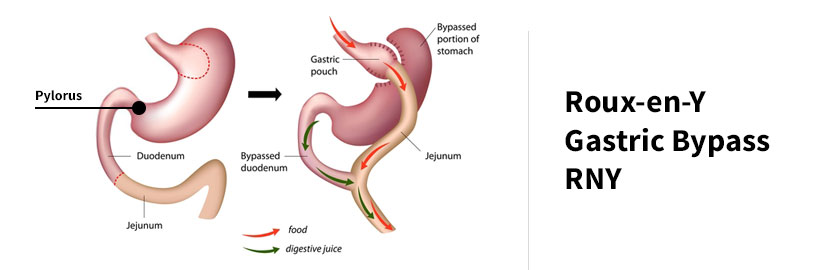
Roux-en-Y Gastric Bypass (RNY) is one of the most established and effective bariatric surgeries worldwide. The procedure involves reducing the size of the stomach and rerouting a portion of the small intestine. This combination limits food intake and decreases calorie absorption, supporting significant and long-term weight loss while also improving obesity-related health conditions.
Who Is It For?
RNY Gastric Bypass may be recommended for patients who:
- Have severe obesity (BMI ≥ 40 or BMI ≥ 35 with related conditions such as type 2 diabetes, hypertension, or sleep apnea).
- Experience reflux or heartburn that may not improve with sleeve gastrectomy.
- Need both restriction (smaller stomach) and malabsorption (less calorie absorption) for effective weight loss.
- Have not achieved success with lifestyle changes or less invasive options.
How the Procedure Works
Stomach pouch creation: A small stomach pouch (about the size of an egg) is created to hold less food.
Intestinal bypass: A section of the small intestine is rerouted and connected to the pouch, bypassing a portion of the digestive tract.
Dual effect: Patients feel full with less food and absorb fewer calories from what they eat.
Average duration: Around 2–3 hours.
Hospital stay: Typically 2–4 days.
Benefits
- Long-term weight loss (often 65–75% of excess weight within 18–24 months).
- Improvement or remission of type 2 diabetes, hypertension, and sleep apnea.
- Better control of reflux symptoms compared to sleeve gastrectomy.
- Proven track record with decades of clinical outcomes.
Risks and Considerations
- Possible risks: bleeding, infection, leakage, strictures, or bowel obstruction.
- Malabsorption requires lifelong vitamin and mineral supplementation.
- Dumping syndrome (rapid movement of food into intestines) may occur, especially with sugary foods.
- Not reversible, unlike some other bariatric procedures.
Recovery and Aftercare
Diet progression: From liquids → pureed → soft foods → solid meals.
Follow-up care: Essential check-ups to monitor weight loss, nutrition, and overall health.
Lifestyle changes: Patients must commit to lifelong healthy eating habits and physical activity.
Return to daily life: Most patients resume light work within 3–4 weeks.